

Which compact SUV offers better all-weather traction for Gig Harbor, WA — the 2026 Ford Bronco Sport or 2026 Jeep Compass?
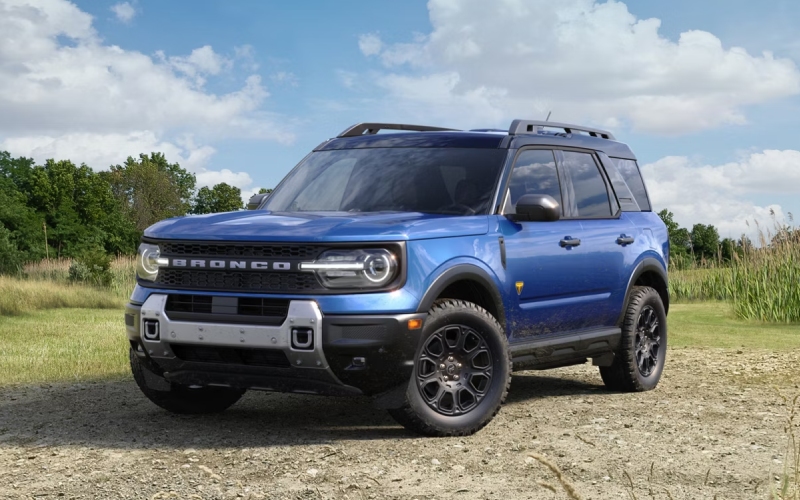
Port Orchard Ford – Which compact SUV offers better all-weather traction for Gig Harbor, WA — the 2026 Ford Bronco Sport or 2026 Jeep Compass?
When you live near steep neighborhood streets, ferry queues, and rain-slick stretches of highway, traction confidence becomes a daily quality-of-life feature. That’s why a common question from shoppers around Gig Harbor, WA is simple: which compact SUV has the better all-weather grip package, the 2026 Ford Bronco Sport or the 2026 Jeep Compass? Here’s a deep dive that looks past brochures and into the systems and features you’ll actually feel on wet pavement, gravel connectors, and muddy trailheads.
How each SUV builds traction confidence
Both models start strong with standard 4×4 across the lineup. That matters when conditions change as you climb from waterfront roads to hilly, tree-lined neighborhoods. The distinction comes from how each brand routes torque and tunes the suspension to keep you moving with control.
The Bronco Sport’s available Advanced 4×4 with a twin-clutch rear drive unit can actively send torque to either rear wheel, helping the vehicle pivot through a tight, off-camber turn or claw forward when one side finds slick leaves and the other finds pavement. G.O.A.T. Modes® (Goes Over Any Type of Terrain) tailor throttle, shift strategy, and traction control; Badlands® models step up to seven modes for precise matching to surface conditions. That coordination between mode logic and hardware is what you feel when the rear end neatly tucks into a wet roundabout instead of pushing wide.
The Compass counters with Selec-Terrain®—Auto, Snow, Sand, and Mud across the lineup—and adds Rock Mode to the Trailhawk® model. Jeep® Active Drive Low (available on Trailhawk) introduces a 20:1 crawl ratio for technical, low-speed terrain. It’s genuine off-road capability. Day to day, though, Selec-Terrain’s broader strokes don’t deliver the same side-to-side torque distribution you get from the Bronco Sport’s twin-clutch hardware.
Everyday drivability and confidence
Traction tech is only as good as the way an SUV communicates what the tires are doing. The Bronco Sport’s HOSS off-road suspension tuning helps the body stay composed over patchy pavement, expansion joints, and rutted gravel. Steering responses feel consistent in the rain, which reduces the “small corrections” fatigue on longer drives.
The Compass feels substantial and settled at highway speeds and its 2.0L turbo engine delivers confident torque for merges. Trailhawk’s Falken® WILDPEAK® all-terrain tires add bite on loose surfaces. However, for mixed-surface, mixed-weather days that include everything from angled driveway exits to muddy parking pull-offs, the Bronco Sport’s torque-vectoring rear unit and well-sorted suspension deliver more intuitive composure.
Driver-assist and visibility in wet weather
On saturated roads and with silver skies, visibility and supportive driver-assist technologies matter as much as mechanical grip. The Bronco Sport offers Ford Co-Pilot360® and available Ford Co-Pilot360® Assist+, including Adaptive Cruise Control with Stop-and-Go and Lane Centering to reduce workload in ferry traffic. A standard 13.2-inch center display makes viewing rear camera feeds and driver-assist prompts clear and immediate.
The Compass answers with standard and available safety features including Forward Collision Mitigation, Blind Spot Monitoring, available Active Driving Assist, and rain-sensing wipers on most trims. It’s a solid safety suite, and the available 10.1-inch Uconnect® touchscreen is responsive. Where the Bronco Sport pulls ahead is the combination of big-screen clarity, ergonomic controls, and a seating position that provides excellent sightlines when the shoulder narrows and spray kicks up.
What about towing and traction at the ramp?
If your weekends include time on the water, both SUVs can handle light-duty towing. The Bronco Sport is rated up to 2,200 pounds when properly equipped, and the Compass is rated up to 2,000 pounds. The difference you’ll feel at a damp ramp is the Bronco Sport’s available twin-clutch rear drive unit, which can feed torque to the wheel with grip to keep you tracking straight as you pull out on a slimy, algae-dusted surface.
Tech that helps in real weather
Modern connectivity matters on wet, gray mornings. The Bronco Sport’s standard 13.2-inch display with wireless Apple CarPlay® and Android Auto™ compatibility makes it easy to call up maps, traffic, and playlists without hunting through submenus. Included for one year, the Ford Connectivity package brings a Wi-Fi® hotspot and streaming apps so passengers stay content from Gig Harbor to Key Center.
The Compass offers available 10.25-inch digital gauges and a 10.1-inch Uconnect® touchscreen with smartphone compatibility, plus an available Alpine® system for rich audio. Nicely done. But for a traction-focused comparison, the Bronco Sport’s big interface and approachable settings let you dial in drive modes and safety features quickly when weather catches you by surprise.
Quick side-by-side traction takeaways
- 4×4 availability: Both SUVs are 4×4 standard, a must for confidence on changing surfaces.
- Rear-axle control: Bronco Sport’s available twin-clutch rear drive unit adds side-to-side torque distribution; Compass does not offer this hardware.
- Drive modes: Bronco Sport brings G.O.A.T. Modes® across the lineup, with up to seven on Badlands®; Compass offers Selec-Terrain® plus Rock Mode on Trailhawk®.
- Suspension tuning: HOSS off-road suspension in Bronco Sport keeps the body composed when the surface gets choppy.
- Tow-and-go confidence: Bronco Sport’s extra 200 pounds of max rating and torque-vectoring rear unit help at wet ramps.
Frequently Asked Questions:
Does the Bronco Sport’s twin-clutch rear drive unit help on wet pavement?
Yes. It can proactively shift torque to the rear wheel with traction, which stabilizes cornering and helps the SUV pull forward cleanly when the surface is slick or cambered.
Is the Compass Trailhawk a strong choice for rough trails?
It is. Trailhawk adds Rock Mode, all-terrain tires, and available Jeep® Active Drive Low for low-speed control. For mixed-surface daily driving, the Bronco Sport’s torque-vectoring rear axle remains the more precise tool.
Which SUV presents traction settings more clearly?
The Bronco Sport’s standard 13.2-inch display and straightforward G.O.A.T. Modes® interface are exceptionally easy to reference at a glance.
Bottom line: if your routine includes rain-slick commutes, gravel trails to viewpoints, and the occasional boat ramp, the Bronco Sport’s integrated traction package makes it the more confidence-inspiring companion. If you want to compare both back to back, Port Orchard Ford is serving Bremerton, Gig Harbor, and Poulsbo with a test drive that highlights the differences you’ll actually feel from behind the wheel.

0 comment(s) so far on Which compact SUV offers better all-weather traction for Gig Harbor, WA — the 2026 Ford Bronco Sport or 2026 Jeep Compass?